
 OUR PODIATRIST – DR. JOSEPH BURKE
 OUR PODIATRIST – DR. JOSEPH BURKE
Dr. Joseph Burke and his team at Cherrywood Foot Care serving the communities of Bellmore, North Bellmore, Merrick, Wantagh, and East Meadow utilizes the latest cutting-edge podiatric technologies, from diagnostic ultrasound, digital radiology, and Noveon laser technology for toenail fungus treatment, to shock wave therapy for heel pain and the minimally invasive surgical procedure, endoscopic plantar fasciotomy. Dr. Burke specializes in the biomechanics of the foot, including custom orthotics and surgical correction of foot deformities. For the best Achilles Tendon Repair on Long Island, Cherrywood Foot Care is the best way to treat your foot condition!
ACHILLES TENDON
The Achilles tendon is the largest tendon in the human body and can withstand forces of 1,000 pounds or more. It also is the most frequently ruptured tendon, usually as a result of a sports injury. Both professional and weekend athletes may suffer from Achilles tendonitis, a common overuse injury and inflammation of the tendon. For expert, Achilles Tendon Repair on Long Island, contact Cherrywood Foot Care today to learn more!
Events that can cause Achilles tendonitis may include:
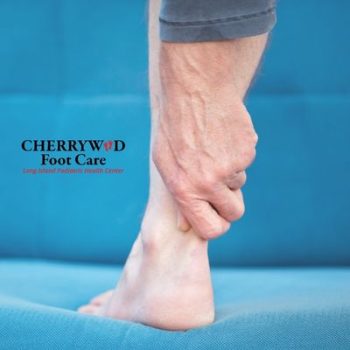
- Hill running or stair climbing.
- Overuse, stemming from the natural lack of flexibility in the calf muscles.
- Rapidly increasing mileage or speed when walking, jogging, or running.
- Starting up too quickly after a layoff in exercise or sports activity, without adequately stretching and warming up the foot.
- Trauma caused by sudden and/or hard contraction of the calf muscles when putting out extra effort, such as in a sprint.
- Improper footwear and/or a tendency toward overpronation.
Achilles tendonitis often begins with mild pain after exercise or running that gradually worsens.
Other symptoms include:
- Recurring localized pain, sometimes severe, along the tendon during or a few hours after running.
- Morning tenderness about an inch and a half above the point where the Achilles tendon is attached to the heel bone.
- Sluggishness in your leg.
- Mild or severe swelling.
- Stiffness that generally diminishes as the tendon warms up with use.

Voted Best On Long Island
Why Choose Cherrywood Foot Care?
- Latest Technology
- Award Winning Care
- No Hassle Appointments
- Convenient Location
Treatment normally includes:
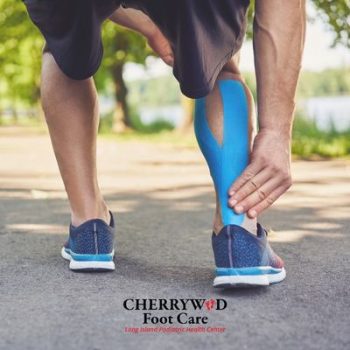
- A bandage specifically designed to restrict motion of the tendon.
- Taking nonsteroidal anti-inflammatory medication for a period of time. Note: Please consult your physician before taking any medication.
- Orthotics, which are corrective shoe inserts designed to help support the muscle and relieve stress on the tendon. Both nonprescription orthoses(such as a heel pads or over-the-counter shoe inserts) and prescribed custom orthotics may be recommended depending on the length and severity of the problem.
- Rest and switching to exercises that do not stress the tendon (such as swimming).
- Stretching and exercises to strengthen the weak muscle group in front of the leg, calf, and the upward foot flexors, as well as massage and ultrasound.
In extreme cases, surgery is performed to remove the fibrous tissue and repair any tears.
ACHILLES SURGERY
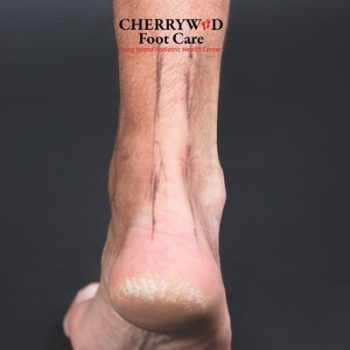
The Achilles tendon attaches the calf and soleus muscles to the heel bone. Thus, it is one of the most important tendons in the body, enabling us to jump, run, even walk.
A rip or tear of the Achilles tendon can consequentially be crippling, and extremely painful. At Cherrywood Foot Care, we have the expertise and understanding to properly address any and all Achilles tendon-related injuries and conditions. For Achilles Tendon Repair on Long Island, contact us today!
We perform surgery to repair a torn or ruptured Achilles tendon on an outpatient basis. We administer a local anesthetic first. Next, we make an incision in the back of the leg above the heel to access the torn tendon. Then the tendon is sewn back together. If the rupture has created swelling, we may have to delay surgery for about a week until the swelling is reduced. Cherrywood Foot Care’s team of board-certified professionals will monitor you every step of the way to ensure the most timely and efficient treatment.
After surgery, a cast or walking boot is usually worn for six to 12 weeks. At first, the cast or boot is positioned to keep the foot pointed downward as the tendon heals. The cast or boot is then adjusted gradually to put the foot in a neutral position (not pointing up or down).
Specific gentle exercises (restricted motion) after surgery can shorten the time needed in rehabilitation.
At Cherrywood Foot Care, we understand just how painful and frustrating any Achilles tendon injury or condition can be. Our team works to not only repair the tendon and resolve any associated issues but also instill in them a peace of mind throughout the process.
CAN SHOES CAUSE ACHILLES TENDONITIS?

Are you a long-distance runner who experienced pain or discomfort at the back of your lower leg? Or have you recently picked up sports such as tennis or basketball on the weekends and notice unusual pain in the muscles that connect your heel to your lower leg? You may be experiencing Achilles tendonitis. The culprit? Your shoes may be the cause. Luckily, here at Cherrywood Foot Care, our experts for Achilles Tendon Repair on Long Island can assess your injury and create a specialized treatment plan that’s right for you!
View Our Participating Insurances
What is Achilles Tendonitis?

Achilles tendonitis is the overuse or inflammation of the tendon, the tissue that connects the calf muscles to the heel bone, after prolonged periods of physical activity. Symptoms include
- Mild ache in the back of the lower leg or upper heel.
- Sensitive or tender to touch.
- Pain when performing physical activities that require the use of the calf or Achilles Tendon.
- Limited range of motion.
- Prolonged periods of pain after heavy physical activity such as running or stair climbing.
What Causes Achilles Tendonitis?
Achilles tendonitis is caused by several factors that include:
- The repetitive or intensive strain on the tendon.
- Age- as you get older the tendon will weaken.
- Lack of warm-up/stretching
- Increasing the intensity or duration of physical activity such as running or hill climbing.
- Physical problems such as obesity or having a naturally flat arch put a strain on the tendon.
- Improper or worn-out shoes.
If you are seeking a treatment plan that is specialized for your needs, our experts for Achilles Tendon Repair on Long Island is here to help.
How Can Shoes Cause Achilles Tendonitis?
Believe it or not, your shoes are a contributing factor to Achilles Tendonitis. Shoes tend to wear out or change the shape of their heel over time. Losing support in the heel will put a strain on the tendon resulting in pain and discomfort. If you have been wearing your workout shoes for prolonged periods, it may be time to switch your old pairs. If you do not want to part ways with an older pair of shoes just yet, a quick stop at your local store and purchasing heel inserts can help. For women, wearing high heels tends to shorten the tendon making it vulnerable to pain and discomfort.
How Can Our Achilles Tendon Repair on Long Island Help You?
If you are experiencing severe, prolonged pain after your workout routine, it’s time to book an appointment with us at Cherrywood Foot Care. Our trained experts for Achilles Tendon Repair on Long Island will assess the severity of the issue and develop an effective course of action to get you back on your feet. If you would like to know more about how we can alleviate your Achilles tendonitis, contact us today!
Get in touch with us
Contact Cherrywood Foot Care
Call us or fill out our online form to request a consultation or ask any questions about our foot care services. We look forward to helping you get back on your feet!
 ACHILLES SURGERY
 ACHILLES SURGERY
The Achilles tendon is the largest and strongest tendon in the human body and is the largest supporter in helping us walk, run, and jump. Also known as the calcaneal tendon, it attaches the calf muscles to the heel bone, allowing it to provide structure and force when on the move.
Although it has great strength, the Achilles tendon is extremely vulnerable to injury. As a result of limited blood supply and aging, one may experience a painful injury to the tendon. Injuries to the Achilles are common in athletes active in sports such as basketball, football, and swimming. Any movement that places high tensions on the tendon could result in a rupture.
The loud popping sound and extreme pain associated with an Achilles tendon rupture are understandably scary. At Cherrywood Foot Care, located in Bellmore, we have the expertise to handle any and all Achilles tendon related injuries. In an outpatient setting- which allows the patient to go home after surgery- our patients are first given a local anesthetic. An incision is made above the heel and below the calf to create an efficient way to access the torn or ruptured tendon. The Achilles is then sewn back together by our team of experienced board-certified professionals who ensure a safe and effective treatment during each procedure.
After surgery, the patient is placed in a cast or splint that runs from the toes to just below the knee to begin recovery. Typically, the patient will need an aid, such as crutches, in order to be mobile after surgery. Depending on the patient’s healing, one may be able to put pressure on the foot with a boot or cast within 2-6 weeks.
At 6 weeks, patients are usually allowed to walk without a cast while placing full weight on the leg. At this point, physical therapy is essential if the patient plans to go back to everyday activities as soon as possible. The process toward strengthening and healing could last from 6 months to a year.
Contact Us For Achilles Tendon Repair on Long Island
At Cherrywood Foot Care of Bellmore, Long Island, we ensure that our patients are treated with the undivided attention and deep understanding they deserve. We know Achilles injuries are painful and stressful, but effective repair and peaceful recovery are always made possible at Cherrywood Foot Care.
Here is a sampling of the many foot-related ailments, conditions and deformities Cherrywood Foot Care’s team of highly trained professional foot experts treat:
EXERCISES TO STRENGTHEN YOUR ACHILLES TENDON
Located in the back lower part of the leg, the Achilles Tendon, connects the calf and the heel. An injury to the Achilles is caused by overuse of the tendon in those who are physically active. The Achilles Tendon is said to be one the strongest in the body, but if it is overused and not stretched properly, it can result in Tendonitis, rupture, or tear. Achilles injuries are often seen as a result of playing sports. If you are an athlete or just think you may have an Achilles Tendon injury, check out our services for Achilles Tendon repair on Long Island at Cherrywood Foot Care.
Causes of Achilles Tendonitis
The most common need for Achilles Tendon repair on Long Island is Achilles Tendonitis. Some of the causes of Achilles Tendonitis are:
-

Running on a hill or climbing stairs
- Lack of flexibility in the calf muscles
- A sudden increase in walking, jogging or running
- Exercising without warming up or stretching the foot
- Trauma to the calf
- Improper footwear
- Wearing high heels daily
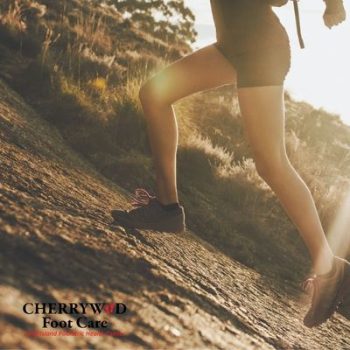
Symptoms of Achilles Tendonitis are:
- Swelling in the back of the heel
- Tight calf muscles
- Limited range of motion
- The back of the heel feels warm to the touch
If you are experiencing any of these symptoms or want to lower your chances of experiencing an Achilles injury, you can try stretches to strengthen the tendon. If your injury requires physical therapy, Achilles Tendon repair on Long Island is offered at Cherrywood Footcare. Here, we will work with you to strengthen and stretch the muscles in the leg and calf. If the injury is minor, here are some stretches you can try to strengthen and stretch the Achilles at home.
Calf Stretch

- Start by placing your hands on the wall and have one leg straight with the heel flat on the ground. Push your hips toward the wall as you place the opposite foot in front with your knee bent. You will begin to feel the stretch in your calf. Hold the position for 10 seconds without letting the heel come off the ground. Continue this exercise for an additional 20 reps on each side.
Toe to wall Stretch
- Start by facing the wall and place your toes up against the wall. With the other leg behind you, keep the heel down and lean forward. For some, you may need to place your toes higher to feel the stretch. Hold the stretch for 30 seconds on each side. Repeat 3 times per leg.
Heel Drop
- To start, hold on to a railing or a wall and put the ball of the foot on the edge of the bottom step. Let your heel drop and allow your feet to relax. Hold for 30 seconds and repeat 3 times.
Sitting Heel Raises
- Start by sitting on a chair while raising your toes as high as you can and then slowly lower. Repeat this exercise 20 times.
- When doing these exercises, it is important to remember that it is ok to feel minor discomfort but you begin to feel sharp pains stop immediately.
Achilles Tendon Repair on Long Island Recovery
If you have had an injury, it is important to receive treatment as soon as possible to have a faster recovery. The longer you hesitate to begin your recovery, the more difficult it will be to have the best results or can result in long-term tendonitis. Achilles Tendonitis can go away in a few days if you are doing the proper stretches, treatment, and rest. If you have a rupture or a tear, this will require a longer recovery time as well as a longer treatment process. In severe cases such as a tear, surgery can be an option. If you are still experiencing sharp pains, visit Cherrywood Foot Care to learn more about Achilles Tendon repair on Long Island.
