
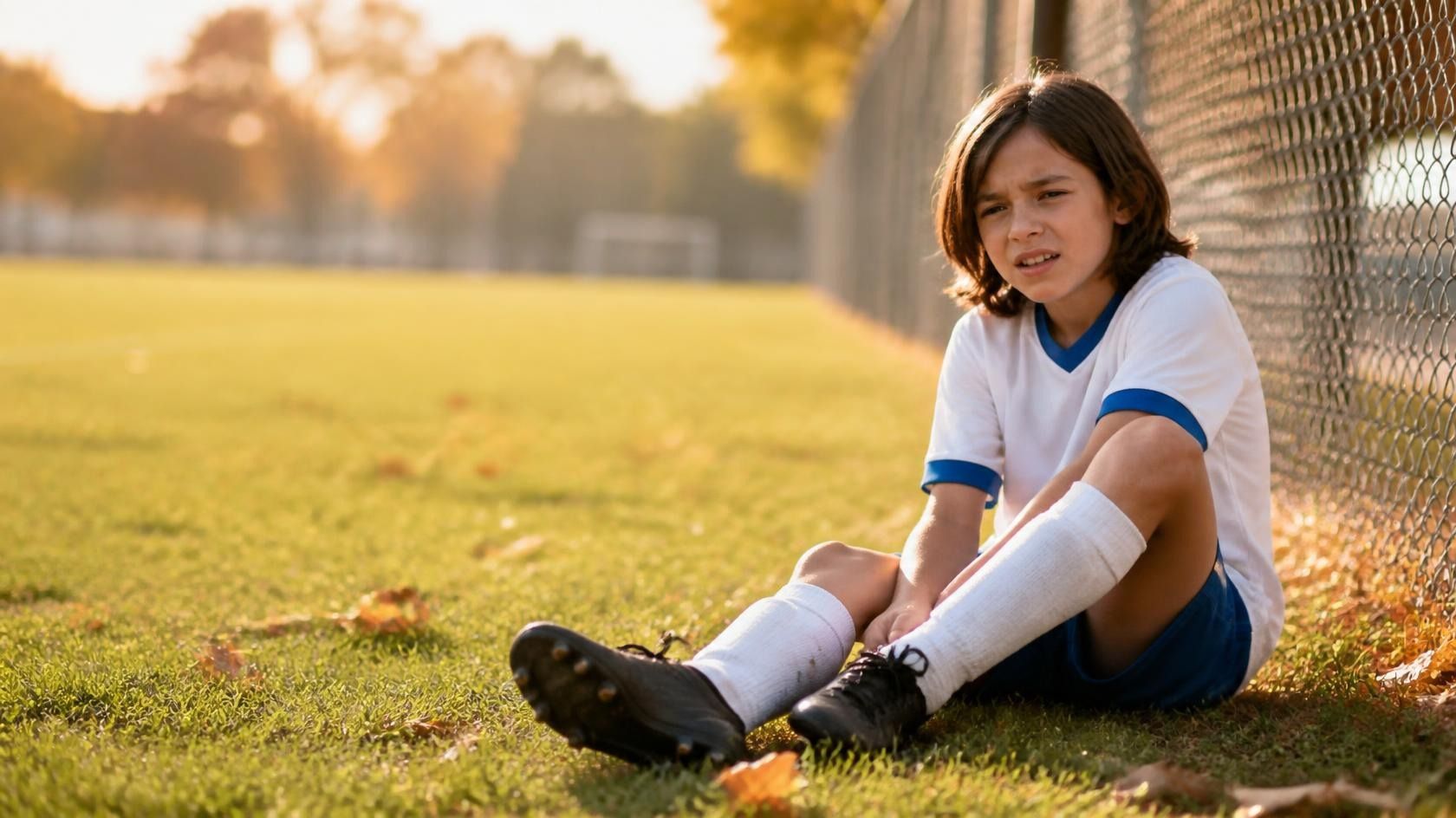
Every August, the same thing happens across Bellmore, Merrick, and Wantagh. Cleats come out of the garage. Preseason practices start. And within about two weeks, a lot of kids start limping.
Most parents hear the complaint, decide it’s growing pains, and wait for it to pass. Sometimes that’s exactly right. But heel pain in an active 10-year-old usually isn’t growing pains at all — it’s a specific, common, and very treatable condition that has a name. Knowing the difference can save your child weeks on the sidelines.
The most common cause of heel pain in kids
If your child is between roughly 8 and 14 years old and complaining about heel pain, the most likely explanation is calcaneal apophysitis — better known as Sever’s disease.
Despite the name, it isn’t a disease at all. It’s an overuse injury. Children’s heel bones aren’t finished growing yet. Until the mid-teens, there’s an active growth plate at the back of the heel, and the Achilles tendon attaches right next to it. During a growth spurt, the heel bone lengthens faster than the surrounding muscles and tendons can keep up. The Achilles gets pulled taut, and every time your child runs, jumps, or lands, it tugs on that growth plate.
Add a hard field, a new pair of cleats with almost no cushioning, and a jump from summer downtime to five practices a week, and you have the recipe we see in our Bellmore office every single fall.
How to tell the difference
Real growing pains tend to be vague, achy, and located in the muscles of the legs — often at night, often on both sides, and usually gone by morning.
Sever’s disease looks different:
- Pain is specifically in the heel, at the back or along the sides, not the calf or thigh
- It’s worse during and right after activity, not in the middle of the night
- Squeezing the sides of the heel hurts. This is the classic sign. Gently compress your child’s heel between your thumb and fingers — if that reproduces the pain, it points toward the growth plate
- Your child limps, walks on their toes, or looks stiff after practice or first thing in the morning
- It often affects both heels, though one is usually worse
The clue that isn’t a symptom
Kids frequently don’t report this pain at all. They just get slower. They stop sprinting for the ball. They ask to sit out. If a normally enthusiastic athlete suddenly loses interest in a sport they loved in June, it’s worth checking their feet before assuming it’s a motivation problem.
Why fall sports make it worse
A few things about this specific time of year stack the deck against young athletes.
Cleats are not supportive shoes
Soccer, football, and field hockey cleats are built for traction, not cushioning. Most have a thin, flat sole with essentially no arch support and very little heel padding. Your child is landing on hard ground with almost nothing between the heel and the impact.
The activity level spikes overnight
Kids go from an unstructured summer to daily practices in a matter of days. Tissue adapts to load gradually; it doesn’t handle a sudden tenfold increase well.
Fields get hard in late summer
After a dry August, the ground on Long Island can be unforgiving — closer to concrete than turf.
Feet have grown since spring
A child’s foot can change size in a matter of months. Cleats that fit at the end of last season may now be forcing toes into a cramped position or letting the heel slide, both of which change how your child loads the foot.
Heel pain that isn’t getting better?
Our doctors evaluate young athletes throughout fall sports season, with digital X-ray on site.
What you can do at home
If the pain is mild and just starting, a few things genuinely help:
- Ease off the aggravating activity.
This is the hardest advice for a competitive kid to hear, but it’s the most effective. That may mean sitting out a few practices rather than the whole season. - Ice after activity.
Fifteen to twenty minutes on the heel after practice, with a thin towel between the ice and the skin. - Stretch the calves and Achilles.
Gentle, consistent stretching relieves tension on the growth plate. Two or three times a day works better than one long session. - Put a cushioned insert in the cleats.
Even an over-the-counter heel cup can meaningfully reduce impact. Take the flat factory insole out first. - Check the shoes on both ends.
Well-cushioned sneakers for everything outside of practice matter just as much as what’s on the field.
When to bring your child in
Call us if any of the following apply:
- The pain hasn’t improved after two weeks of rest and home care
- Your child is limping consistently or refusing to bear weight
- There’s swelling, bruising, or redness around the heel
- Only one heel hurts, particularly after a specific fall or twist
- Pain wakes your child up at night
- There’s any numbness or tingling in the foot
That list matters because a handful of other conditions — stress fractures, tendon injuries, and less common issues — can look similar at first glance. A short exam and, when needed, a digital X-ray at our office can help rule out other causes. If the picture is still unclear, we’ll tell you what further evaluation makes sense. We’d much rather tell you it’s nothing serious than have you find out in November that a stress fracture went unaddressed since August.
The reassuring part
Here’s what parents most want to hear: Sever’s disease resolves. It is self-limiting, and it is not expected to cause lasting damage or to follow your child into adulthood. Once the growth plate finishes maturing — usually sometime in the mid-teens — the condition stops happening.
Most children improve within a few weeks to a couple of months with rest, stretching, and better footwear. When symptoms are more stubborn, custom orthotics, physical therapy, or a short period of immobilization get things back on track. Our doctors see this condition regularly during fall sports season, and with early treatment most young athletes are able to return to full participation.
The goal isn’t to pull your child out of sports. It’s to keep a manageable problem from turning into a season-long one.
Before the season gets going
If your child plays a fall sport, two quick things are worth doing this month:
- Have their feet measured rather than guessing at last year’s size. Do it late in the day, when feet are at their largest.
- Add cushioned inserts to the cleats before the first practice, not after the pain starts.
And if your child has had heel pain in a previous season, a preseason visit is worth the half hour. We can assess their foot structure, check for tight tendons or flat feet that raise the risk, and fit them properly before the problem arrives.
Frequently asked questions
How do I know if my child’s heel pain is growing pains or something else?
True growing pains are usually vague, achy, felt in the muscles of the legs, worse at night, and gone by morning. Sever’s disease is felt specifically in the heel, is worse during and right after activity, and hurts when you gently squeeze the sides of the heel. If squeezing the heel reproduces the pain, that points toward the growth plate rather than growing pains.
What is Sever’s disease?
Sever’s disease, or calcaneal apophysitis, is an overuse injury of the growth plate at the back of the heel. It is not actually a disease. In children roughly 8 to 14, the heel bone is still growing, and during a growth spurt the Achilles tendon pulls on that growth plate every time the child runs, jumps, or lands. It is the most common cause of heel pain in active children.
Why does heel pain show up at the start of fall sports season?
Four things line up in August. Cleats are built for traction rather than cushioning, so there is very little between the heel and the ground. Activity jumps from an unstructured summer to daily practices in a matter of days. Fields on Long Island are hard after a dry summer. And children’s feet often grow between seasons, so last year’s cleats no longer fit correctly.
What can I do at home for my child’s heel pain?
Ease off the activity that triggers the pain, ice the heel for fifteen to twenty minutes after practice with a towel between the ice and the skin, stretch the calves and Achilles gently two or three times a day, add a cushioned insert or heel cup to the cleats after removing the flat factory insole, and make sure the shoes worn off the field are well cushioned too.
When should my child see a podiatrist for heel pain?
Call us if the pain has not improved after two weeks of rest and home care, if your child is limping consistently or will not bear weight, if there is swelling, bruising, or redness, if only one heel hurts after a specific fall or twist, if pain wakes your child at night, or if there is any numbness or tingling. Stress fractures and tendon injuries can look similar at first, and a short exam with digital X-ray when needed helps rule those out.
How long does Sever’s disease last, and will my child have to quit the sport?
Sever’s disease is self-limiting and is not expected to cause lasting damage or continue into adulthood. Most children improve within a few weeks to a couple of months with rest, stretching, and better footwear. More stubborn cases may need custom orthotics, physical therapy, or a short period of immobilization. The goal is not to pull a child out of sports, but to keep a manageable problem from becoming a season-long one.
Get ahead of it before the season does
Preseason foot checks and same-season heel pain evaluations for young athletes in Bellmore, Merrick, and Wantagh.
Cherrywood Foot Care has served families in Bellmore, North Bellmore, Merrick, Wantagh, and East Meadow for years, with on-site digital X-ray, custom orthotics, and physical therapy — so young athletes can be evaluated and treated without a string of referrals. To schedule an appointment, call (516) 826-9000 or visit us at 2791 Jerusalem Avenue, Bellmore, NY 11710.
This article is for general educational purposes and is not a substitute for an in-person evaluation. Individual results vary. If your child is experiencing foot or heel pain, please schedule an appointment.
