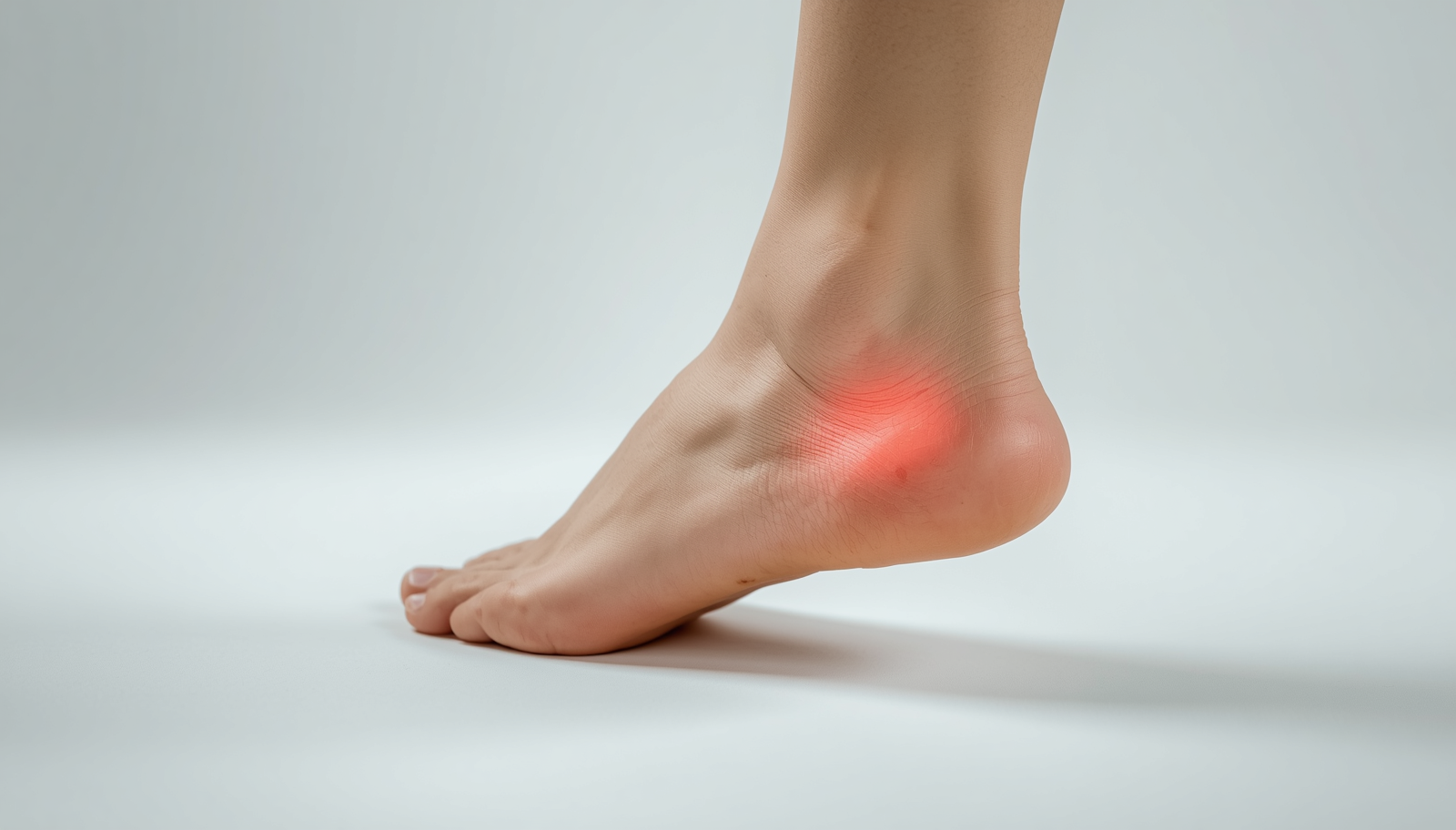
Heel pain is one of the most common complaints that brings adults into a podiatry office – and it is also one of the most commonly misdiagnosed. Plantar fasciitis has become a household name, so when that first sharp twinge appears after getting out of bed, most people jump straight to that label. The problem is that tendons, bursae, nerves, bone, and the fat pad under the heel can all produce pain in the same general area. Getting the diagnosis right matters, because treatments that help plantar fasciitis can be useless or even harmful for a different condition.
Plantar Fasciitis: The Baseline
Plantar fasciitis is inflammation and microtearing where the thick band of tissue along the bottom of the foot meets the heel bone. Most people describe it as a sharp, stabbing pain near the inside edge of the heel, worst with the first steps after sleep or after a long period of sitting. The pain often eases with a few minutes of walking, then returns after prolonged standing or a long walk.
Tenderness concentrated at the medial calcaneal tubercle – the spot where the fascia attaches – is the classic finding on exam. That pattern is recognizable, but it is not exclusive to plantar fasciitis, which is why the conditions below are so frequently overlooked.
Seven Other Causes Worth Knowing
Achilles Tendinopathy
Aching or stiffness at the back of the heel or up the tendon, worse with hill walking, running, or rising onto the toes. There may be visible thickening of the tendon.
Key difference: Pain is at the posterior heel, not the bottom. It worsens with active calf contraction and resisted push-off – not first steps.
Heel Bursitis
Inflammation of the small fluid-filled sacs near the heel. Retrocalcaneal bursitis sits between the Achilles and the heel bone; subcutaneous bursitis produces a visible soft lump at the very back of the heel.
Key difference: Localized swelling or redness behind the heel; pain aggravated by shoe collar pressure rather than first-step loading.
Baxter’s Nerve Entrapment
Irritation of a small branch of the lateral plantar nerve running near the medial heel. Produces deep, burning or aching pain, sometimes with intermittent tingling or pins-and-needles sensation.
Key difference: Neurological quality to the pain; may not respond to plantar fascia stretching; tenderness in a narrow zone under the abductor hallucis muscle.
Tarsal Tunnel Syndrome
Compression of the tibial nerve behind the inside ankle, causing burning, tingling, numbness, or shooting pain that can radiate along the sole toward the toes.
Key difference: Sensory changes, pain that radiates beyond the heel, and a positive Tinel sign (tapping below the medial malleolus reproduces the tingling).
Calcaneal Stress Fracture
A tiny crack in the heel bone from repetitive loading. Pain builds gradually with weight-bearing activity and improves with rest. May be associated with swelling or bruising.
Key difference: Focal bone tenderness you can point to with one finger; pain that worsens progressively over days to weeks; sometimes present at night.
Fat Pad Atrophy
Thinning or loss of elasticity in the natural cushioning under the heel. Produces a deep, bruised pain directly under the center of the heel, worse on hard surfaces, better with cushioned shoes.
Key difference: Pain is diffuse across the weight-bearing heel center, not the medial edge; often related to age, prior cortisone injections, or high-impact history.
Sever’s Disease
Calcaneal apophysitis affecting the growth plate in adolescents during growth spurts. Pain at the back or bottom of the heel increases with sports and improves with rest. Most common ages 8-15.
Key difference: Patient age and recent rapid growth. Requires activity modification and calf stretching – not the injection or orthotic regimens used for chronic adult plantar fasciitis.
How Clinicians Tell These Apart
A focused history and hands-on exam usually narrow the diagnosis significantly. The questions that matter most: Where exactly is the pain? When is it worst – first steps, during activity, after activity, or at rest? Is there any numbness, tingling, or swelling? What shoes make it better or worse?
On exam, a clinician looks for the precise location of tenderness, swelling, changes with ankle movement, sensory differences, and whether calf contraction or passive stretching reproduces or changes the pain. Most of these conditions have a distinct pattern once you know what to look for.
When to Skip the Wait-and-See Approach
Some warning signs mean heel pain should be evaluated promptly rather than left to settle on its own:
- Pain that is getting progressively worse over days or weeks, not better
- Focal bone tenderness you can pinpoint with one finger
- Visible swelling, bruising, or a lump behind the heel
- Numbness, tingling, or pain that radiates toward the toes
- Pain that prevents normal walking or wakes you at night
When the diagnosis remains unclear or any of those red flags are present, imaging such as X-ray, ultrasound, or MRI can confirm a stress fracture, significant tendon pathology, nerve entrapment, or fat pad thinning. The right image at the right time saves months of misdirected treatment.
Why the Right Diagnosis Matters
Treatments are not interchangeable. Plantar fascia stretching and night splints help many people with plantar fasciitis, but they will not heal a calcaneal stress fracture – and loading a stress fracture the wrong way can make it worse. Repeated corticosteroid injections that feel helpful short-term can accelerate fat pad thinning. Nerve compression requires a completely different approach than a mechanical tendon problem.
The fastest path to recovery is an accurate diagnosis first, not a trial-and-error run through generic heel pain protocols. A focused evaluation – history, hands-on exam, and targeted treatment when needed – usually gets there quickly.
Ready to Find Out What’s Really Causing Your Heel Pain?
Persistent heel pain that isn’t improving deserves a proper evaluation. Cherrywood Foot Care in Bellmore provides focused heel pain assessments for patients across Nassau County’s South Shore.
Heel Pain FAQ
Is all heel pain plantar fasciitis?
No. Plantar fasciitis is the most familiar cause, but tendons, bursae, nerves, bone, and the heel’s fat pad can all produce pain in the same area. Several of these conditions are routinely mistaken for plantar fasciitis.
How can I tell plantar fasciitis apart from another cause?
Location and timing are the biggest clues. Classic plantar fasciitis is a sharp pain near the inside edge of the heel that is worst with the first steps after rest. Pain at the back of the heel, burning or tingling, or a spot you can pinpoint with one finger all point toward a different diagnosis.
When should I see a podiatrist for heel pain?
Sooner rather than later if the pain is getting worse over days or weeks, you have focal bone tenderness, visible swelling or a lump, numbness or tingling that radiates toward the toes, or pain that stops you walking normally or wakes you at night.
Why does the right diagnosis matter so much?
Treatments are not interchangeable. The stretching and night splints that help plantar fasciitis can do nothing for a stress fracture, and loading a stress fracture the wrong way can worsen it. An accurate diagnosis first is the fastest path to recovery.