Most people know what smoking does to the lungs and the heart. Far fewer know that the feet are often where the damage shows up first, and sometimes where it shows up worst.
The feet sit at the very end of the circulatory system, farther from the heart than any other part of the body. When blood flow is reduced anywhere, the toes and heels are the first places to run short. That’s why problems like a sore that won’t close, toes that are always cold, or calf pain on a short walk so often come back to circulation. And when circulation is the issue, smoking is very often part of it.
Thursday, November 19 is the Great American Smokeout, the American Cancer Society’s yearly invitation to quit for one day as a starting point. November is also National Diabetes Month, and the two are more connected than most people realize. If you or someone in your family smokes, this is a good month to understand what’s happening below the ankles.
How smoking affects the feet
Three things happen with every cigarette, and all three matter to the feet.
- Blood vessels tighten. Nicotine narrows blood vessels. The effect of each cigarette is temporary, but for someone who smokes throughout the day, the small vessels in the feet spend most of their waking hours narrowed.
- Blood carries less oxygen. Cigarette smoke contains carbon monoxide, which attaches to red blood cells in place of oxygen. Less oxygen reaches the tissue, and tissue at the end of the line, like the toes, feels it first.
- Arteries are damaged over time. Smoking injures the inner lining of the arteries and speeds up the buildup of plaque. In the legs, that process is called peripheral artery disease, or PAD.
Each of these slows healing on its own. Put them together and it’s easy to see why smoking is tied to so many foot problems.
The conditions we see linked to smoking
Peripheral artery disease. PAD is the big one. A large long-term study published in the Journal of the American College of Cardiology in 2019 followed more than 13,000 adults for over two decades and found that smoking was more strongly linked to PAD than to heart disease or stroke. People who smoked more than a pack a day had more than five times the risk of people who never smoked. The classic early sign is cramping or aching in the calf, thigh, or buttock while walking that eases after a few minutes of rest. Many people write it off as age or being out of shape. Learn more about how we evaluate and treat poor circulation.
Wounds that won’t heal. A small cut, a blister from new shoes, a crack in a dry heel. In most people these close within a week or two. With reduced circulation they can stall for weeks, and an open wound on the foot is an open door for infection. That’s when professional wound care matters.
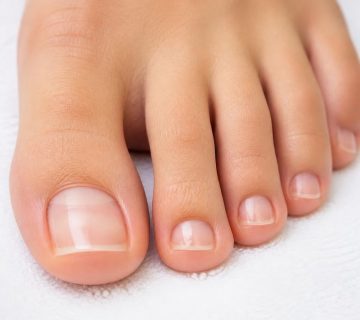
Cold, pale, or discolored feet. Feet that are always cold, toes that turn pale or bluish, shiny skin, thinning hair on the toes and lower legs, and toenails that grow very slowly can all be signs that blood flow isn’t keeping up.
Slower recovery after foot surgery. Bone and soft tissue both depend on a steady blood supply to heal. Smokers have consistently higher rates of delayed bone healing, wound complications, and infection after foot and ankle surgery, which is why many surgeons ask patients to stop nicotine for a period before and after any elective procedure.
Buerger’s disease. Buerger’s disease is less common. It’s inflammation and clotting in the small arteries and veins of the hands and feet, and it occurs almost exclusively in people who use tobacco, often younger adults. It can cause painful sores on the toes and fingertips. Stopping tobacco completely is the only treatment known to halt it.
Smoking and diabetes: a combination worth taking seriously
National Diabetes Month and the Great American Smokeout share a calendar page for good reason. Diabetes on its own can reduce both circulation and sensation in the feet. Smoking reduces circulation further. When both are present, the risk of foot ulcers, infection, and, in the most serious cases, amputation goes up considerably.
Here’s why the two together are so risky. Neuropathy means a blister or pressure sore may not be felt. Reduced circulation means it may not heal. A person can develop a significant wound with no pain to warn them and not enough blood flow to close it.
According to the CDC, people who smoke are also 30 to 40 percent more likely to develop type 2 diabetes than people who don’t. For anyone managing diabetes who also smokes, quitting is one of the most effective things they can do for their feet, alongside blood sugar control and regular diabetic foot exams.
What about vaping?
Switching to e-cigarettes removes the smoke but usually not the nicotine, and nicotine is the part that narrows blood vessels. So for circulation, vaping still carries much of the same problem. Nicotine patches and gum used for a limited time as part of a plan to quit are a different situation. They’re widely recommended because they help people stop, and the goal is to taper off them.
The good news: feet respond when you quit
The body starts recovering quickly once you stop.
- Within a day, carbon monoxide levels in the blood drop back toward normal, and more oxygen reaches the tissue.
- Within a few weeks to a few months, circulation improves and walking often gets easier.
- Over the following years, the risk of PAD keeps falling. The same 2019 study found that for heavy smokers it took many years to fall all the way to the level of people who never smoked. The sooner someone quits, the sooner that clock starts, and it’s never too late for it to help.
Quitting also changes the outlook for anything we’re actively treating. Wounds heal more reliably, surgery becomes safer, and treatment for circulation problems works better.
Help with quitting, close to home
Most people who quit successfully don’t do it on willpower alone, and needing more than one attempt is normal. New York residents can call the free New York State Smokers’ Quitline at 1-866-NY-QUITS (1-866-697-8487) or visit nysmokefree.com for coaching and, for eligible callers, free nicotine patches. A primary care doctor can also talk through prescription options that make quitting easier.
When to have your feet checked
If you smoke or have smoked in the past, any of the following is worth an evaluation:
- Calf, thigh, or buttock pain while walking that goes away with rest
- A sore, blister, or cut on the foot that hasn’t started healing within a week
- Toes that look pale, blue, or purple, or turn deep red when the foot hangs down
- One foot noticeably colder than the other
- Thinning hair on the toes, shiny skin, or toenails that have nearly stopped growing
- Foot or toe pain at night that eases when the leg hangs over the side of the bed
Any wound that turns black, has spreading redness, or comes with a fever should be seen the same day.
Getting it checked locally
A circulation check is quick and painless. It starts with feeling the pulses in the feet, looking at skin color and temperature, and seeing how quickly color returns to the toes. When something doesn’t look right, a simple noninvasive test comparing blood pressure at the ankle and the arm can tell a great deal. Anyone who needs further testing or care can be referred to the right specialist.
Cherrywood Foot Care has served families across Bellmore, North Bellmore, Merrick, Wantagh, Levittown, and East Meadow for years, treating circulation problems, slow-healing wounds, and diabetic foot concerns in the same office. If you smoke, have quit recently, or are thinking about quitting this month, it’s a good time to find out where your feet stand. To schedule an evaluation, book your appointment online, call (516) 826-9000, or visit us at 2791 Jerusalem Avenue, Bellmore, NY 11710.
Frequently asked questions
I only smoke a few cigarettes a day. Does that still affect my feet?
Yes. Risk rises with the amount smoked, but there’s no level of smoking that’s harmless to blood vessels, and light smokers still have higher rates of PAD than people who don’t smoke. Cutting down is a good step. Stopping entirely is what makes the biggest difference.
Why are my feet always cold?
Cold feet have many causes, including the weather, thyroid issues, and simply being someone who runs cold. Persistently cold feet in someone who smokes or has diabetes, though, can be a sign of reduced circulation. If one foot is colder than the other, or the cold comes with color changes or pain when walking, it’s worth having checked. Here’s more on why feet stay cold.
Can circulation in my feet really improve after I quit?
In many cases, yes. Blood vessels are no longer being tightened by nicotine all day, and oxygen delivery improves within about a day. Plaque that has built up over years doesn’t simply disappear, but quitting slows its progress, and many people notice walking getting easier over the following months.
I’m scheduled for foot surgery. Do I need to stop smoking first?
Your surgeon will give you specific instructions, but expect the question. Smoking and other nicotine use raise the risk of delayed healing, infection, and bone that doesn’t fuse properly. Stopping before surgery and staying off nicotine through recovery gives the procedure its best chance of success.
Should I see a podiatrist or my regular doctor?
Both play a role. A primary care doctor manages overall health and can help with quitting. A podiatrist examines the feet closely, catches early skin, nail, and circulation changes, and treats wounds and foot problems directly. For anyone who smokes and has diabetes, regular visits with both are a good idea.
This article is for general educational purposes and is not a substitute for an in-person evaluation. Individual results vary. If you have a foot wound that isn’t healing or new pain when walking, please schedule an appointment.