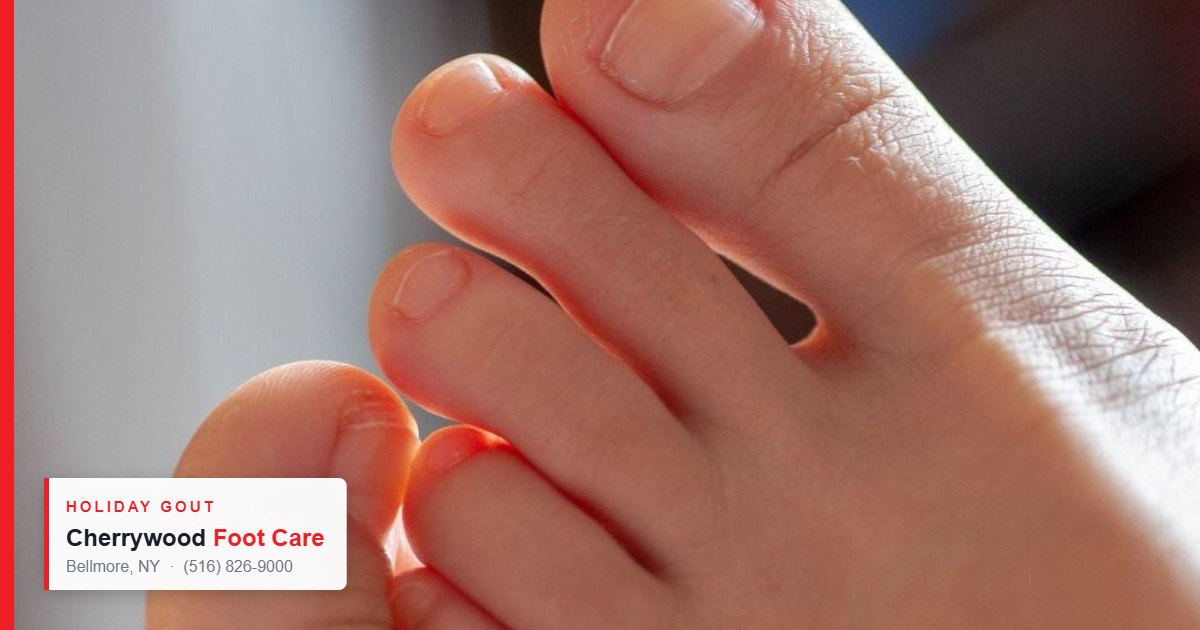
It usually starts in the middle of the night. Someone goes to bed after a long holiday dinner feeling fine, then wakes up at two or three in the morning with a big toe that’s hot, swollen, red, and so tender that the weight of the bedsheet is too much.
That’s gout, and it’s common this time of year. The stretch between Thanksgiving and New Year’s lines up nearly every known gout trigger in the same few days: rich food, more alcohol than usual, less water, short nights, and long hours on your feet.
If you’ve had gout before, this is the time of year to plan ahead. If you never have, it’s worth knowing what it looks like, because a first flare is easy to mistake for an injury or an infection.
What gout actually is
Gout is a form of inflammatory arthritis caused by uric acid. Uric acid is a normal waste product, made when the body breaks down substances called purines, which are found in our own cells and in many foods. Normally the kidneys clear it. When levels build up, uric acid can form needle-shaped crystals inside a joint, and the immune system reacts to those crystals with intense inflammation.
The big toe joint is the most common place for that to happen, which is why podiatrists see so much gout. Uric acid crystals form more easily at cooler temperatures, which is likely part of why the feet are affected so often, and the big toe joint takes a great deal of load with every step. Gout can also affect the top of the foot, the ankle, the heel, and the knee.
Why flares cluster around the holidays
Each of these can trigger a flare any time of year. The holidays just tend to pile several of them into the same week.
- Purine-rich food. A study published in the Annals of the Rheumatic Diseases followed more than 600 people with gout and found that those who ate the most purines over a two day period were nearly five times as likely to have a flare as those who ate the least. Animal sources like red meat, organ meats, gravy made from drippings, and shellfish carried far more risk than plant sources.
- Alcohol. Research in people with gout has found that beer, wine, and spirits all raise the risk of a flare, and the effect can show up within a day of drinking.
- Sugary drinks and desserts. Fructose, found in regular soda, many juices, and foods made with high fructose corn syrup, raises uric acid levels.
- Dehydration. Travel, alcohol, and busy days when nobody drinks enough water all concentrate uric acid in the blood.
- Long hours on your feet. Hosting means standing in a kitchen for hours, and minor stress on a joint can be enough to set off a flare in someone who is already primed for one.
- Missed medication. Travel and changed routines make it easy to skip doses of daily uric acid lowering medication, which lets levels climb right when the other triggers are piling up.
There’s also a reason the pain so often starts at night. Research published in Arthritis & Rheumatology found that gout flares are more than twice as likely to begin overnight or in the early morning as during the day. Lower body temperature, mild overnight dehydration, and natural dips in the body’s own anti-inflammatory hormones are all thought to play a part.
What a gout flare feels like
- Sudden, severe pain, usually in a single joint, often the big toe, often starting overnight
- Swelling, warmth, and shiny red or purplish skin over the joint
- Tenderness so intense that a sock, a shoe, or a bedsheet hurts
- Pain that peaks within 12 to 24 hours
- Lingering tenderness and stiffness for days afterward, even as the worst of it eases
Left untreated, a flare usually settles on its own within one to two weeks. That doesn’t mean it should be left alone. Repeated flares can damage the joint, and over time uric acid deposits called tophi can form under the skin.
What to do in the first 24 hours
Treatment works best when it starts early, so the first day matters.
- Rest and elevate the foot. Keep weight off the joint as much as possible.
- Ice, carefully. A cold pack wrapped in a thin towel for 15 to 20 minutes at a time can ease pain and swelling. Never put ice directly on the skin, and skip this step if you have reduced sensation or circulation problems in your feet.
- Drink water. Plenty of it, and skip alcohol entirely until the flare has passed.
- Follow your flare plan. If your doctor has already given you instructions for a flare, start them now rather than waiting to see if the pain gets worse. Don’t stop daily uric acid lowering medication during a flare unless your doctor tells you to.
- Call to be seen. Prescription anti-inflammatory treatment works best in the early hours of a flare, and a prompt visit shortens how long you’re laid up.
When it might not be gout
A hot, red, swollen joint isn’t always gout, which is why a first flare should be evaluated in person. An infected joint or a skin infection like cellulitis can look very similar, and both need different treatment quickly. A stress fracture, a sprain, or arthritis in the big toe joint can also cause pain in the same spot.
Seek care the same day if a red, swollen joint comes with fever or chills, if redness is spreading up the foot, if there’s an open wound nearby, or if you have diabetes or circulation problems. Those situations shouldn’t wait for a routine appointment.
A blood test for uric acid is helpful, but it can read normal during a flare, so on its own it doesn’t rule gout in or out. A thorough exam, a digital X-ray of the joint, and, when needed, testing fluid from the joint for crystals give the clearest picture.
Enjoying the holidays without the flare
No one needs to skip Thanksgiving. A few adjustments go a long way:
- Keep portions reasonable. Go easy on second helpings of meat and gravy, and fill more of the plate with vegetables and other sides.
- Pace the drinks. Alternate every alcoholic drink with a full glass of water, and set a limit before the evening starts.
- Pick water or seltzer over soda and sweetened punch.
- Keep taking daily medication on schedule, including while traveling. Pack it in your carry-on.
- Wear supportive, roomy shoes if you’ll be on your feet hosting, rather than tight dress shoes.
- Ask about a flare plan ahead of time. If you’ve had gout before, knowing what to do if a flare starts on a weekend or while you’re away saves a lot of misery.
Cherries have a long association with gout, and there’s some research behind it. A 2012 study found that people with gout who ate cherries over a two day period had a lower risk of flares. They aren’t a substitute for medical treatment, but they make a reasonable dessert choice.
Getting it handled locally
A first gout flare is worth a visit to confirm what it is. Repeat flares are worth a visit to break the pattern, because gout is very manageable once it’s properly diagnosed and treated over the long term.
Cherrywood Foot Care treats gout and other causes of big toe pain for patients across Bellmore, North Bellmore, Merrick, Wantagh, Seaford, Levittown, and East Meadow, with on-site digital X-ray so the joint can be evaluated in the same visit. Evening hours on Tuesdays and Thursdays and Saturday morning hours make it easier to fit in a visit when a flare doesn’t arrive on a convenient day. To schedule, book your appointment online, call (516) 826-9000, or visit us at 2791 Jerusalem Avenue, Bellmore, NY 11710.
Frequently asked questions
Can I get gout if I’ve never had it before?
Yes. Many people have their first flare in their forties or later. Men are affected more often than women until menopause, when the gap narrows. Excess weight, high blood pressure, kidney disease, and certain medications, including some diuretics, all raise the risk. A first flare during the holidays is common because the triggers stack up all at once.
Does eating turkey cause gout?
Turkey alone isn’t the problem. It contains a moderate amount of purines, similar to other meats. The issue is the total load of a holiday meal: bigger portions of meat, gravy made from drippings, alcohol, and sweets, often several days in a row. Reasonable portions and plenty of water make a real difference.
How long does a gout flare last?
Pain usually peaks within the first day and, without treatment, settles over one to two weeks. Starting treatment early can shorten that considerably. If flares are becoming more frequent or lasting longer, it’s a sign that uric acid levels need longer-term management.
Should I go to the emergency room for gout?
Most gout flares can be handled in the office. Go to urgent care or the emergency room if a swollen joint comes with fever or chills, if you feel generally unwell, or if redness is spreading quickly, because those can point to infection rather than gout.
Is big toe pain always gout?
No. Bunions, arthritis in the big toe joint, turf toe, fractures, ingrown toenails, and infections can all cause pain in the same area. That’s why an exam, and often an X-ray, matters before settling on a diagnosis.
This article is for general educational purposes and is not a substitute for an in-person evaluation. Individual results vary. If you have a red, hot, swollen joint along with fever or chills, seek care right away.